Still Driving at Night? This Is What's Actually Happening in Your Eyes
This article is produced by Klaris
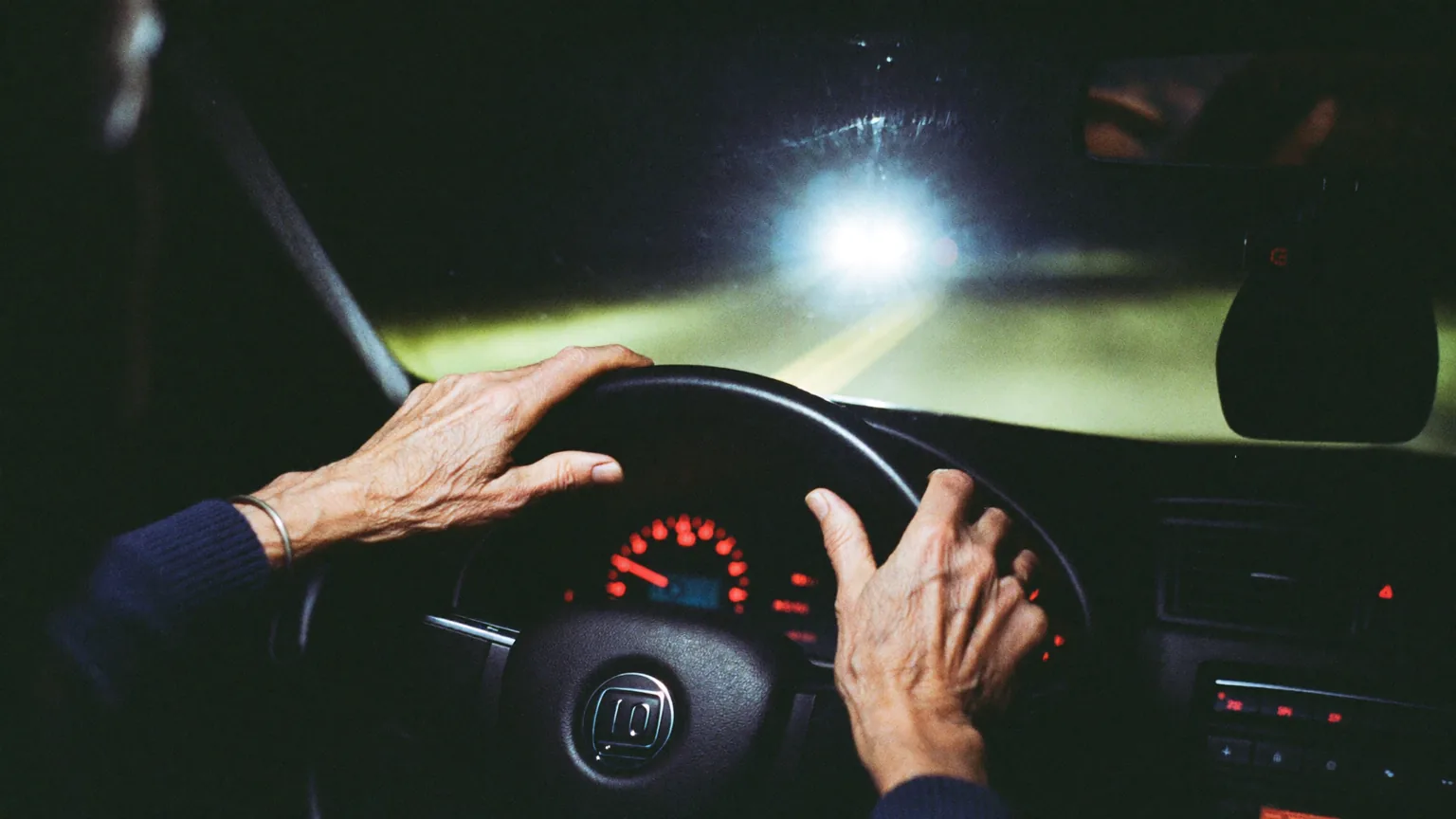
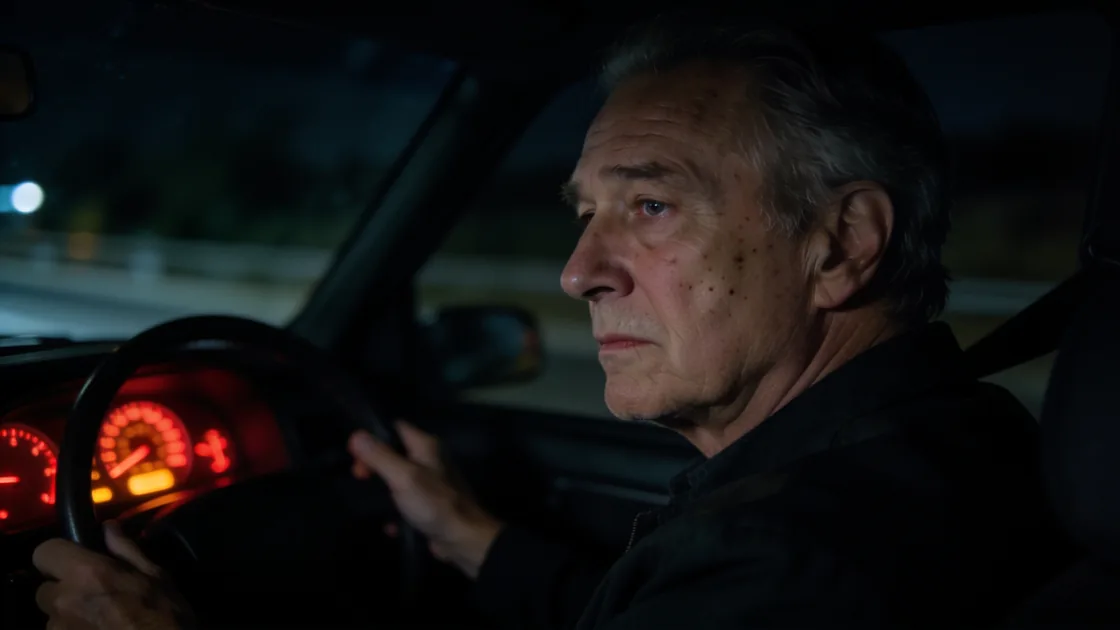
Somewhere around 55 or 60, most people notice the same thing. Night driving starts to feel different.
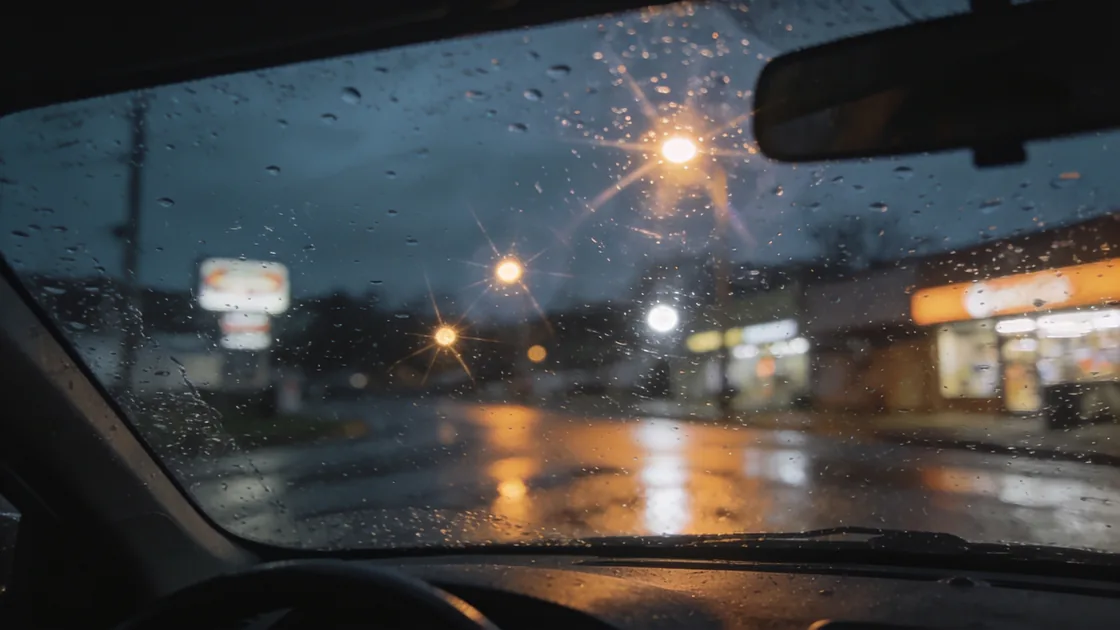
Oncoming headlights blaze. Streetlights have halos around them. The lines on the road seem harder to pick out. You blink after a bright car passes and vision takes a few seconds to settle.
You haven’t become a worse driver.
Your eyes are doing exactly what the biology predicts they will do, and understanding why is the first step to keeping your independence behind the wheel for another twenty years.
Here is what is actually happening, in plain words.
- Your pupils have gotten smaller
- Your lens has yellowed
- Glare recovery has slowed
- Contrast has faded
- Most of it is either manageable or supportable
1.Your pupils have gotten smaller
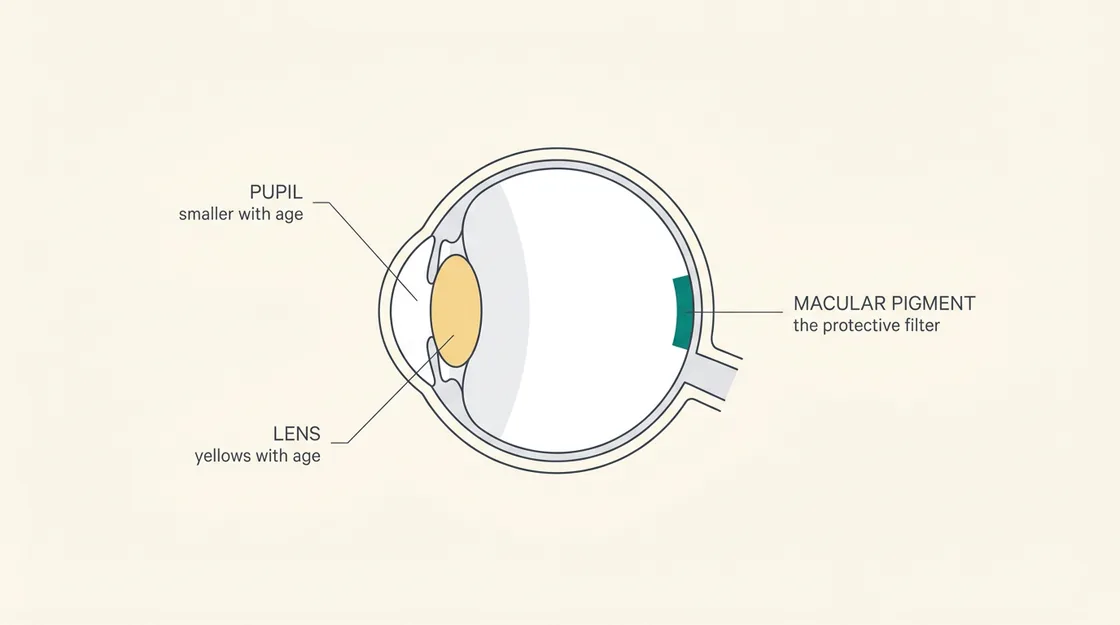
The black circle in the center of your eye is the pupil. It lets light in. Younger pupils are bigger. Older pupils are smaller, and they open more slowly when the lights go down.
In full daylight you barely notice. On a dark country road, you notice a lot.
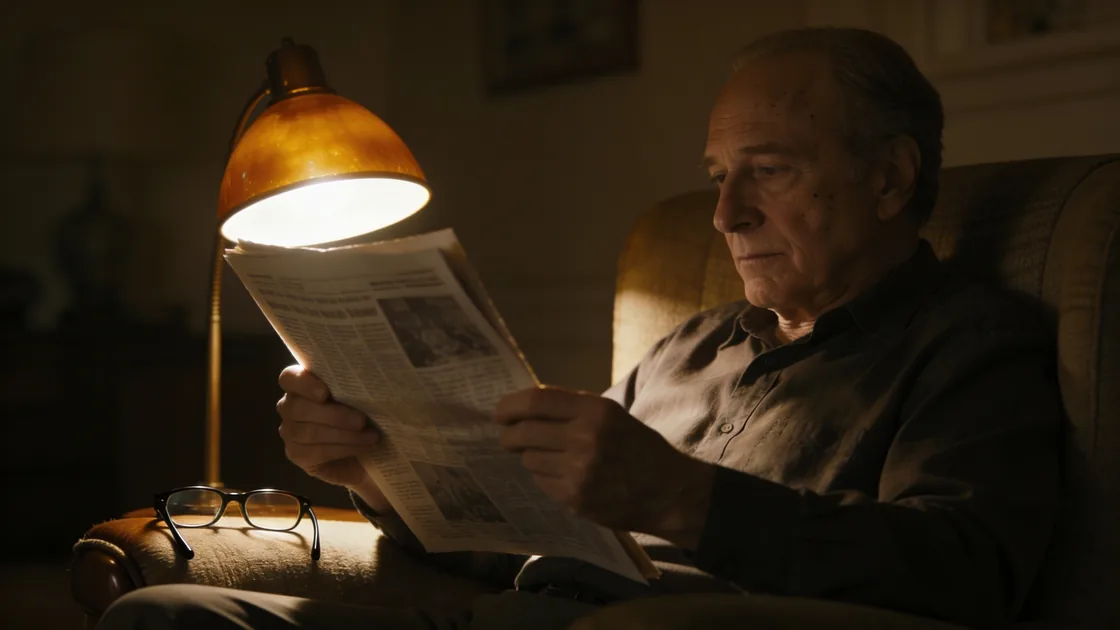
This is why older drivers often need much more ambient light to read, and much more to see the road clearly.
Research suggests older eyes need several times more light to read the same print as a 20-year-old. Same eye, same brain. Just less light getting in.
2.Your lens has yellowed
The crystal-clear lens you were born with slowly yellows with age. This is a normal process. The lens is packed with proteins, and those proteins accumulate small changes over decades.
A yellowed lens doesn't just filter color. It scatters light inside the eye.
Instead of a clean beam of headlight hitting the retina, you get a spray of scattered light. That's the halo around streetlights and the blur around a pair of oncoming high-beams.
If the lens yellowing progresses far enough, it becomes a cataract, and cataracts are one of the most treatable eye conditions in medicine, with a short outpatient surgery that restores clarity in the vast majority of cases. If halos have become significantly worse, a check-up is worth booking.
3.Glare recovery has slowed
When a bright light hits your eye, a chemical reaction in the retina temporarily "bleaches" the light-sensitive cells. The eye has to reset them before you can see dim detail again.
This is called glare recovery time.
In a healthy 25-year-old, the retina recovers from a flash of bright light in a few seconds. By 60, that same recovery can take considerably longer.
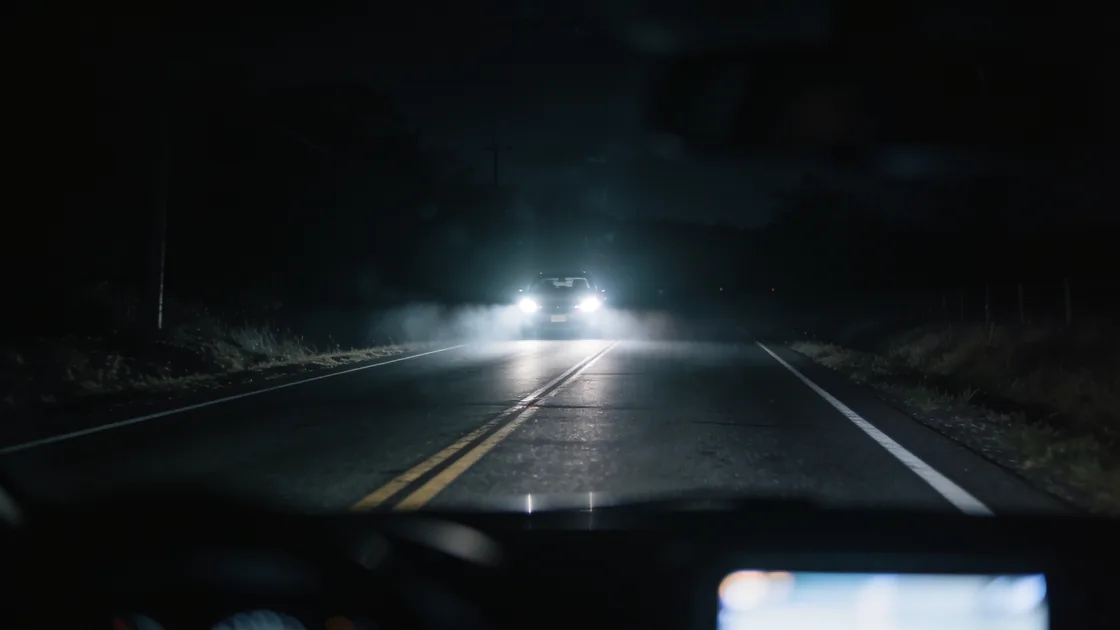
That's the experience of being "blinded" by a passing car's headlights and having to wait for the road to reappear.
Here is the important part: glare recovery isn't fixed by aging. It is strongly influenced by the thickness of the macular pigment, the protective yellow layer at the center of your retina. Thicker pigment, faster recovery. Thinner pigment, slower recovery.
Macular pigment is built from three plant carotenoids: lutein, zeaxanthin, and meso-zeaxanthin.
Clinical trials have shown that supplementing these carotenoids measurably increases macular pigment density, which is linked in studies to better glare recovery. Timelines vary from person to person.
This is one of the cleanest nutrition-to-function links in eye science. And it matters directly for night driving.
4.Contrast has faded
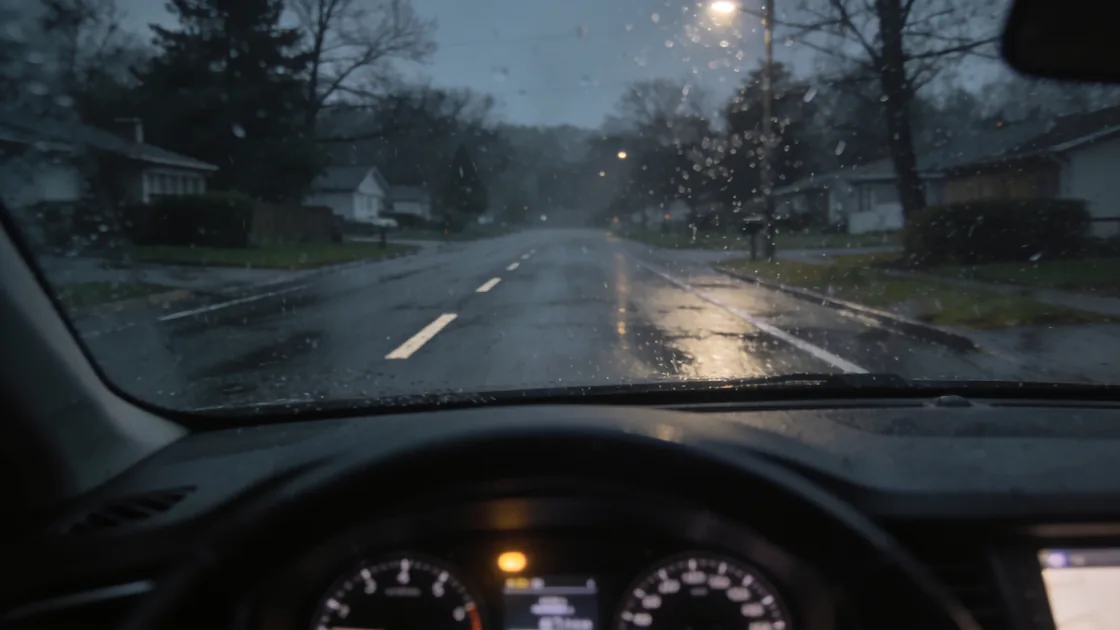
The chart at the eye doctor's office is black on white. The road at 10 p.m. is a dark grey lane marker on darker grey asphalt, seen through a yellowed lens and a small pupil.
That's contrast sensitivity, the ability to pick out subtle shades. It's different from visual acuity (how sharp you see) and it is rarely tested in a standard eye exam.
Contrast sensitivity drops with age, and it drops faster in eyes with thin macular pigment.
A driver can have a perfect eye chart reading at the DMV and still struggle with contrast on a rainy night. The two skills are not the same.
5.The focus muscle tires faster
Switching your gaze from the road to the dashboard to the mirror to the road again, over and over for an hour, is serious work for the small muscle inside your eye that changes focus.
That muscle is the ciliary muscle, and like any muscle, it tires.
When it tires, vision smears for a beat every time you change focus, and fatigue builds up behind the eyes.
Many older drivers describe feeling "mentally exhausted" after an hour of night driving in a way they weren't a decade ago.
6.Dry eye makes everything worse
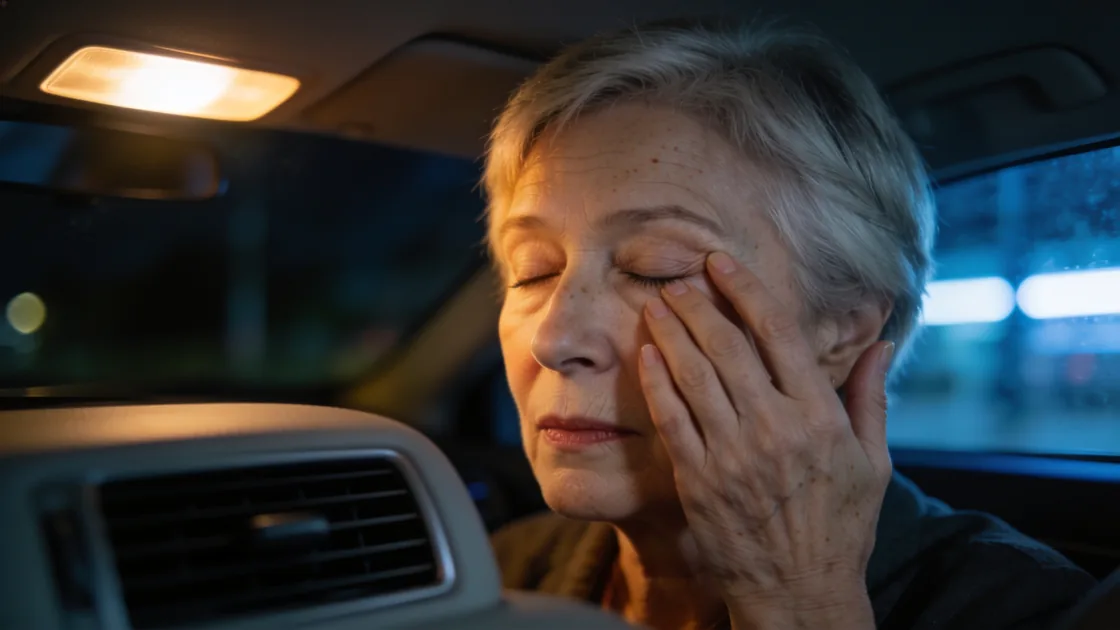
Your eye's first lens is actually the tear film, the thin layer of fluid coating the surface.
If the tear film is unstable, vision blurs between blinks and takes longer to settle after a blink.
Dry eye is common in older adults, and it gets worse in the dry, heated air of a car cabin.
If vision feels like it's "coming and going" during night driving, tear film instability is often a major part of it.
7.What actually helps
8.Where Klaris fits
Klaris is built around the nutrients night-driving vision depends on:
- Lutein 10 mg + Zeaxanthin 2 mg, the two main macular pigment carotenoids, at the doses used in the AREDS2 trial
- Meso-Zeaxanthin 10 mg, the third macular carotenoid, most concentrated at the center of vision where glare recovery happens
- Astaxanthin 4 mg, for the focus muscle and oxidative support across the eye
- Vitamin C 250 mg + Vitamin E 134 mg, antioxidant support
- Zinc citrate 25 mg + Copper 2 mg, well-absorbed, gentler on the stomach than cheaper forms
- Active B-vitamins, B6 as P5P, folate as L-5-MTHF, B12, for the nerve connection from eye to brain
- No beta-carotene, safe for current and former smokers
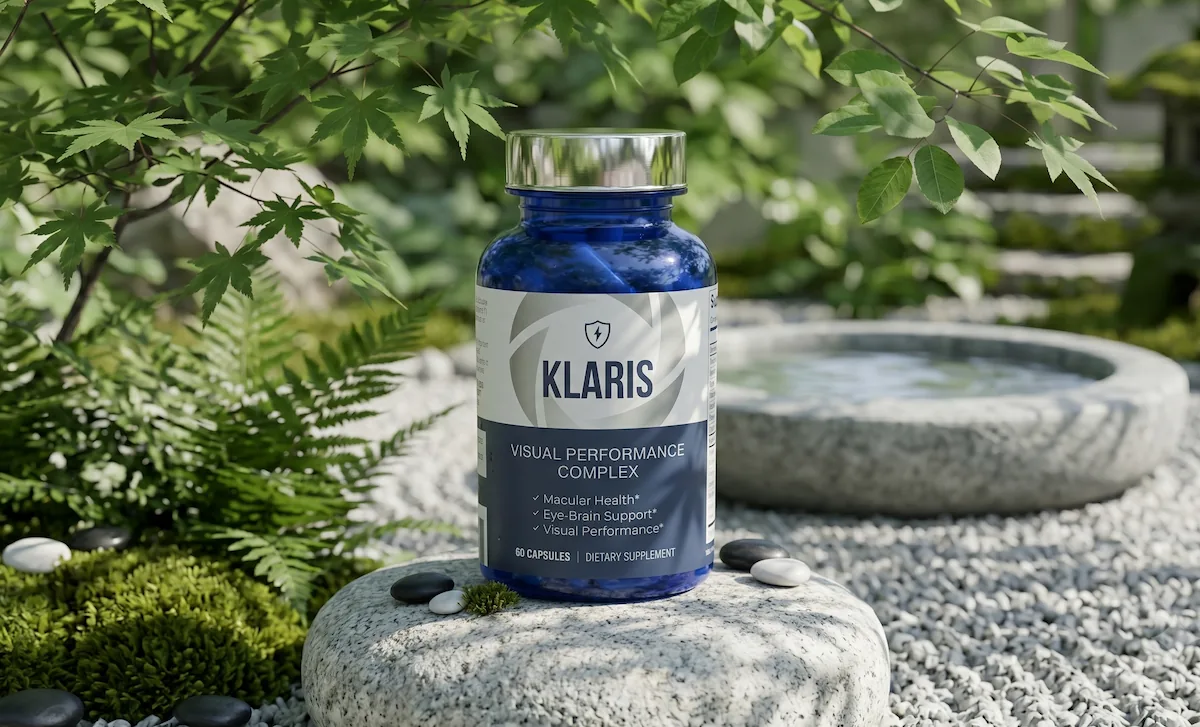
Plant-based, sourced from marigold flowers and red algae. Produced in an FDA-registered, GMP-certified facility. Two capsules daily with food.
Measurable changes in macular pigment density typically appear after 3 to 6 months of consistent use. Reductions in glare discomfort and eye fatigue often appear sooner.
9.The takeaway
If night driving feels harder than it used to, you are not imagining it.
Your pupils are smaller, your lens is yellower, your glare recovery is slower, and macular pigment commonly thins with age. Most of those changes are either manageable or supportable.
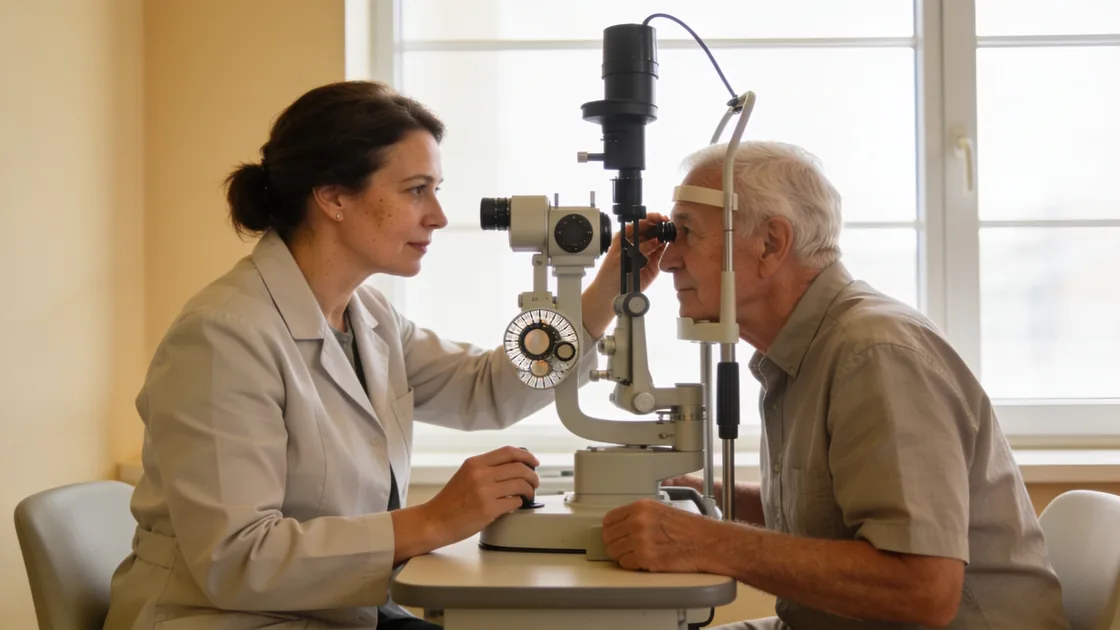
- Book the exam
- Update the prescription
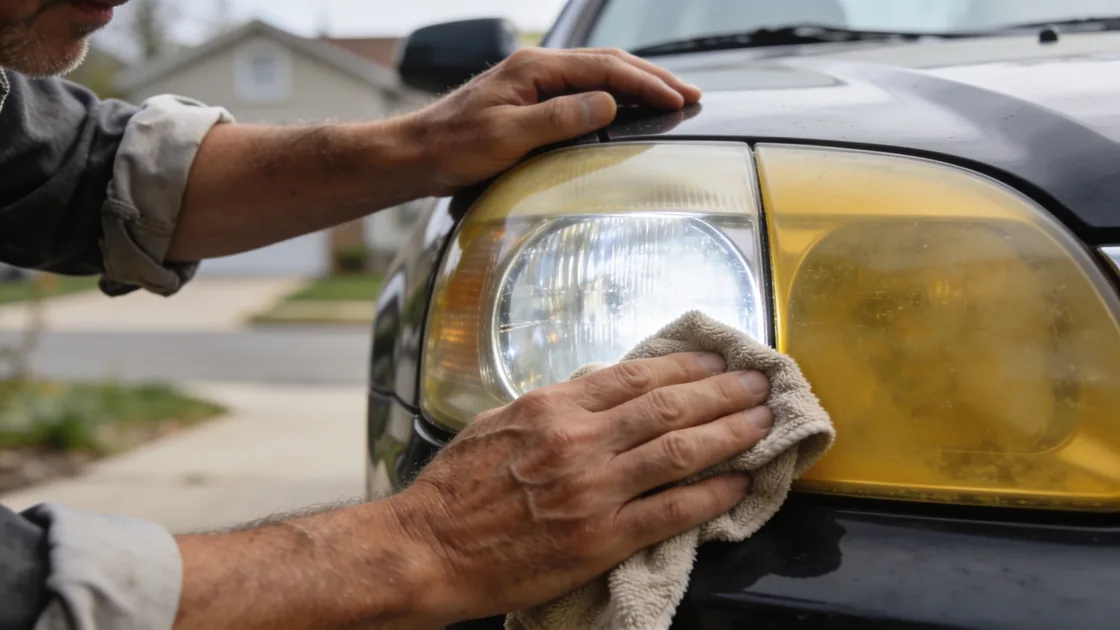
- Clean the headlights
- Feed the retina what it needs to rebuild its own protective filter
Your independence on the road doesn’t have to shrink just because you've crossed 60.

Keep reading
First Signs Of Vision Decline Most People Miss (And What Eye Doctors Now Recommend)
A neuro-ophthalmology specialist explains why vision change goes unnoticed for years - and the modern formula that closes the gap AREDS2 left open.
AREDS2 vs AREDS3: What Actually Changed (And Whether You Should Switch)
Bausch + Lomb launched PreserVision AREDS3 in May 2026. Exactly what changed from AREDS2, what the evidence shows, and who should switch.
I'm an Optometrist. Here's Why I Took My Own Mother Off Her Old Eye Vitamin.
After 15 years of recommending the same formula, an optometrist explains the three ingredients modern research says are missing from most eye vitamins.
This article is for general information and does not replace medical advice. If night vision has changed suddenly, or you are experiencing double vision, halos, or pain, see an eye doctor promptly. These statements have not been evaluated by the Food and Drug Administration. Klaris is not intended to diagnose, treat, cure, or prevent any disease.
References
- Owsley C. Aging and vision. Vision Res. 2011.
- Loughman J, et al. The impact of macular pigment augmentation on visual performance. Vision Res. 2012.
- Stringham JM, Hammond BR. Macular pigment and visual performance under glare conditions. Optom Vis Sci. 2008.
- Sasaki M, et al. Astaxanthin reduces accommodative fatigue. J Clin Ther Med. 2006.
About the author
Neuro-ophthalmology, 20+ years in clinical practice
Dr. Markovic reviews every Klaris article for medical accuracy. Her clinical focus is age-related vision change, macular pigment and the nutrition behind both. Read Dr. Markovic’s full profile.