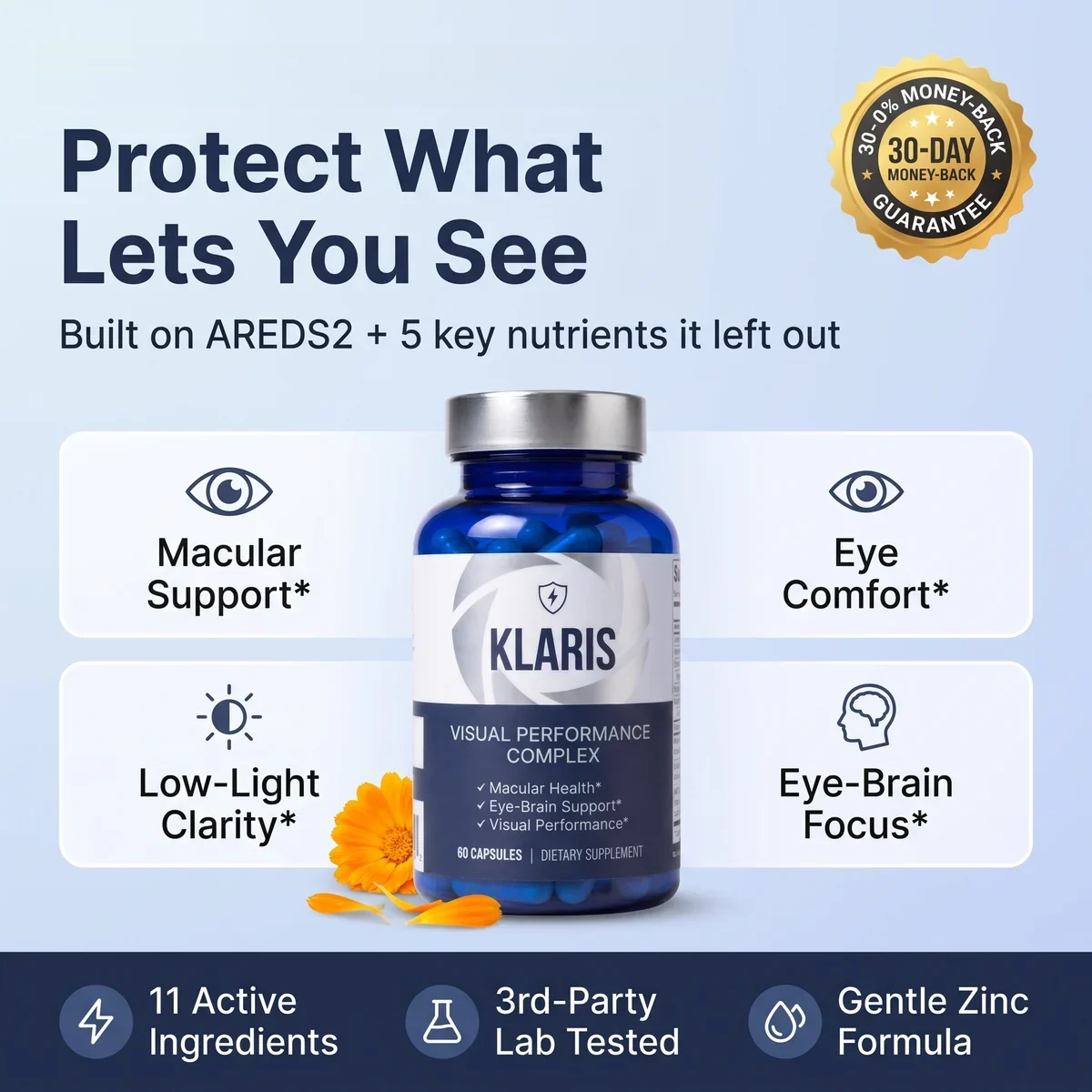







Complete Eye & Brain Support, Day and Night
Klaris gives you all 3 eye pigments your body can't make on its own, at the doses used in research. 11 ingredients. 1 dose a day.
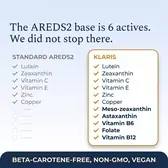
Compared with AREDS2 and AREDS3, Klaris is the only one with all 3 pigments plus astaxanthin. No beta-carotene.
- Supports sharper contrast and steadier low-light vision*
- Eases late-day eye fatigue and that heavy, dry feeling*
- Supports the signal pathway from your eyes to your brain*
- One dose instead of 4 bottles: AREDS2 formula, meso-zeaxanthin, astaxanthin, B-complex.
- Join 10,000+ people protecting their vision daily
Passed lab screening for heavy metals and microbes.
You don't notice this happening.You adjust to it.
YOUNGER EYES
OLDER EYES

Faces soften before anything else does.
Why Klaris?
Your body can't make any of the pigments needed. They come from food or a supplement, every day.
Where the 3 pigments sit
- Meso-zeaxanthincentre, where vision is sharpest
- Zeaxanthinmiddle
- Luteinouter ring
How long each plan lasts
Pigment levels build slowly, with daily intake over months. Longer plans keep you supplied without gaps.*
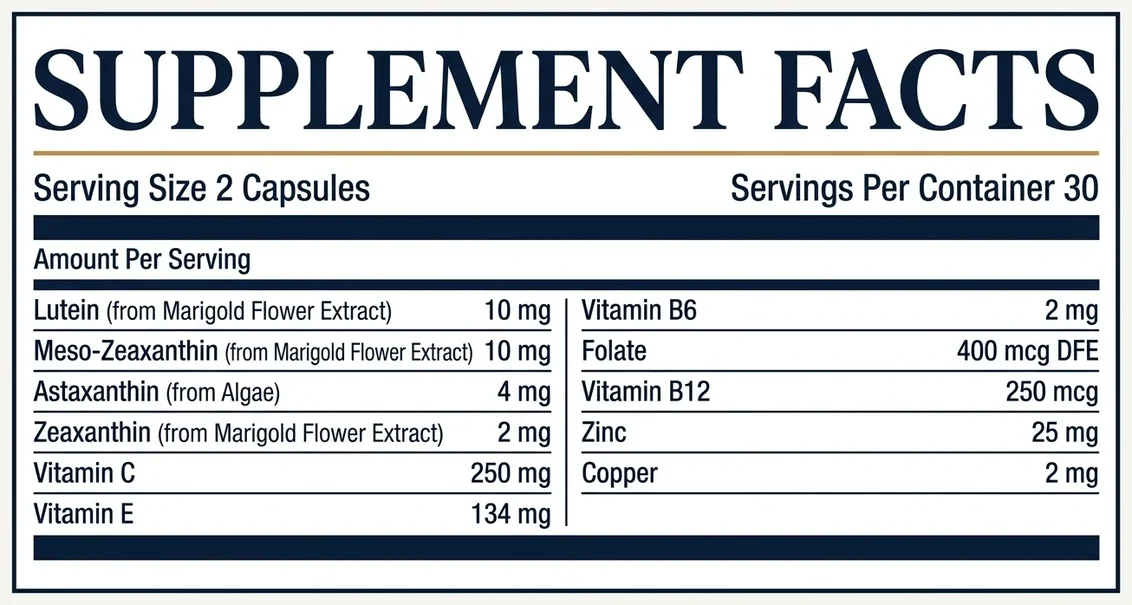
What's inside
GMP-certifiedfacilities
Third-party testedindependent lab
Every amount printed. Nothing hidden in a blend.
Independent lab results: see the Defacto report ↑
How to take it
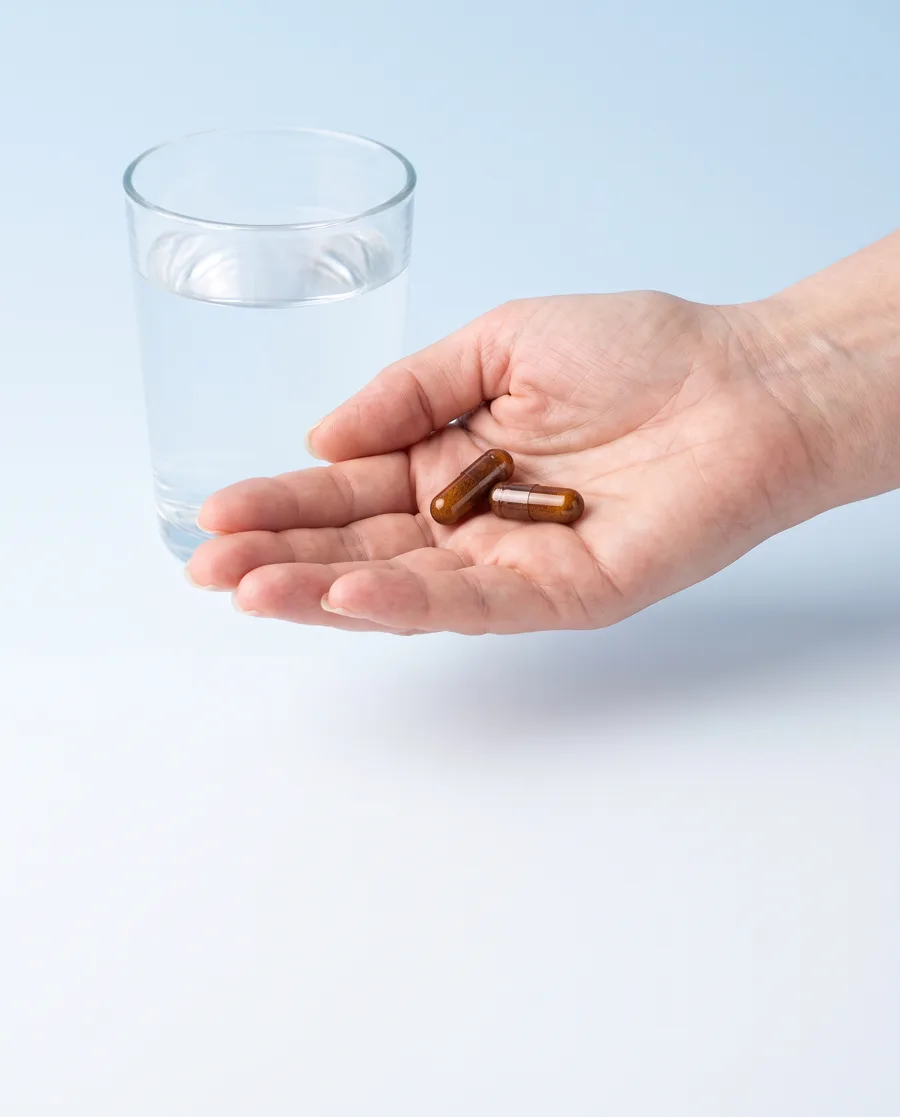
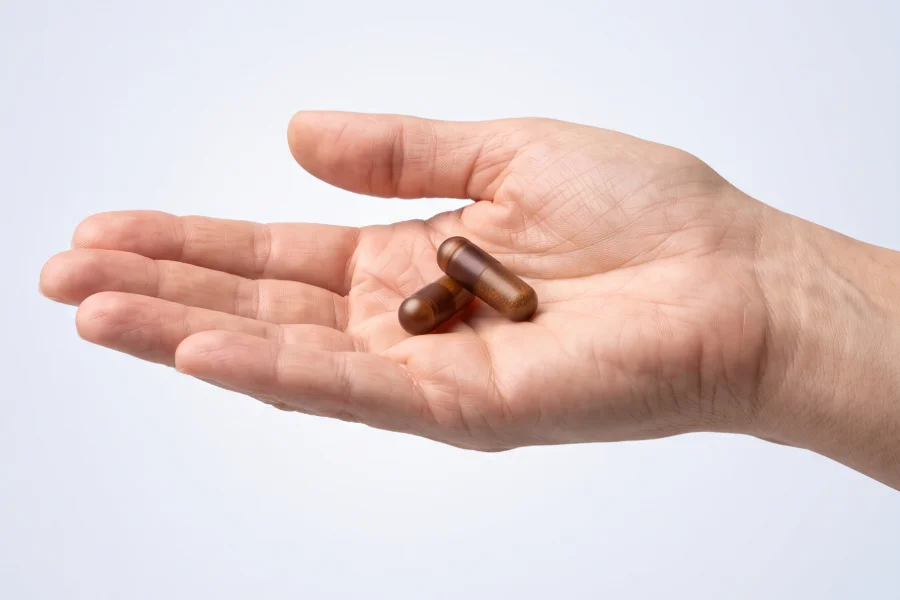
2 capsulesa day, together or split
With a mealone with some fat
Every day1 bottle = 30 days
Lutein and zeaxanthin are fat-soluble, so they absorb best taken with food.
- Split it: 1 capsule in the morning, 1 in the evening, each with a meal.
- Hard to swallow? Open the capsules and stir the powder into food with some fat, like yogurt or a smoothie.
Same time each day makes it easy to keep up. Taking other supplements? See the FAQ ↓
Shipping & returns
Order today
Ships
Arrives
30-day risk-free trial
Money-back guarantee
Free shipping
On every order
All 11 at clinical doses
No blends, no under-fills
Third-party tested
GMP-certified facilities
Four thingsKlaris works on

Focus
- Supports eye-brain pathway*
- Sharper focus, less visual fatigue*
- Steadier all-day concentration*

Comfort
- Eases late-day eye fatigue*
- Soothes dry, tired eyes*
- Built for long close-focus days*

Clarity
- Sharper contrast in low light*
- Faster night-glare recovery*
- Fewer halos around lights*
Protection
- Rebuilds the eye's natural filter*
- The AREDS2 formula plus the third pigment it skips*
- Beta-carotene-free, smoker-safe*
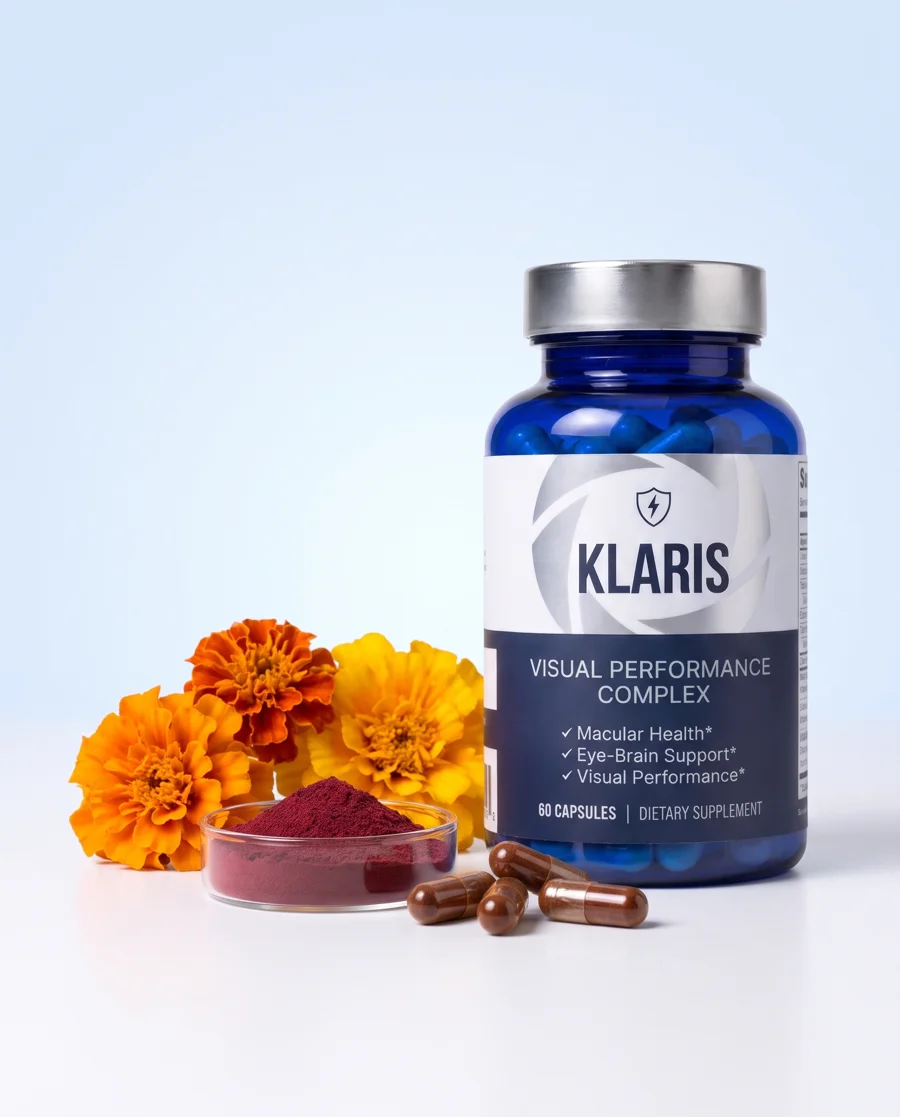
Eleven ingredients,at clinical doses.
22 mg
Macular Carotenoid TrioAll three macular pigments, including 10 mg meso‑zeaxanthin.
4 mg
AstaxanthinSupports eye comfort through long days of screen use.*
3 forms
Active-form B VitaminsB6, folate (B9) and B12. Support the eye-to-brain signal pathway.*
250 mg
Vitamin CSupports the lens and the small vessels feeding the retina.*
134 mg
Vitamin EProtects the delicate lipids inside eye tissue.*
25 + 2 mg
Zinc + CopperThe AREDS2 amounts.
See the full Supplement Facts

What to expect, week by week
WEEKS 1–2
In your bloodstream
Carotenoids start absorbing. Nothing to notice yet, and that's expected.
WEEKS 3–6
Reaching the tissue
Deposits begin in eye tissue. This is the window the screen-comfort research looks at.
WEEKS 8–12
Building up
Levels keep rising with steady intake. Glare recovery and contrast are what the studies measure here.
MONTH 4+
Holding steady
Daily intake holds the level. Macular pigment research runs over months, not weeks – which is why the multi-month plans exist.
How Klaris comparesto AREDS2 and AREDS3.
Lutein
Zeaxanthin
Meso‑zeaxanthin
Astaxanthin
B vitamins
Vitamins C & E
Zinc + copper
Beta‑carotene free
KLARIS
AREDS3
AREDS2
KLARIS
AREDS3
AREDS2
Lutein
Zeaxanthin
Meso‑zeaxanthin
Astaxanthin
B vitamins
Vitamins C & E
Zinc + copper
Beta‑carotene free
AREDS2 and AREDS3 contents as published by the leading AREDS formula brand, October 2026.
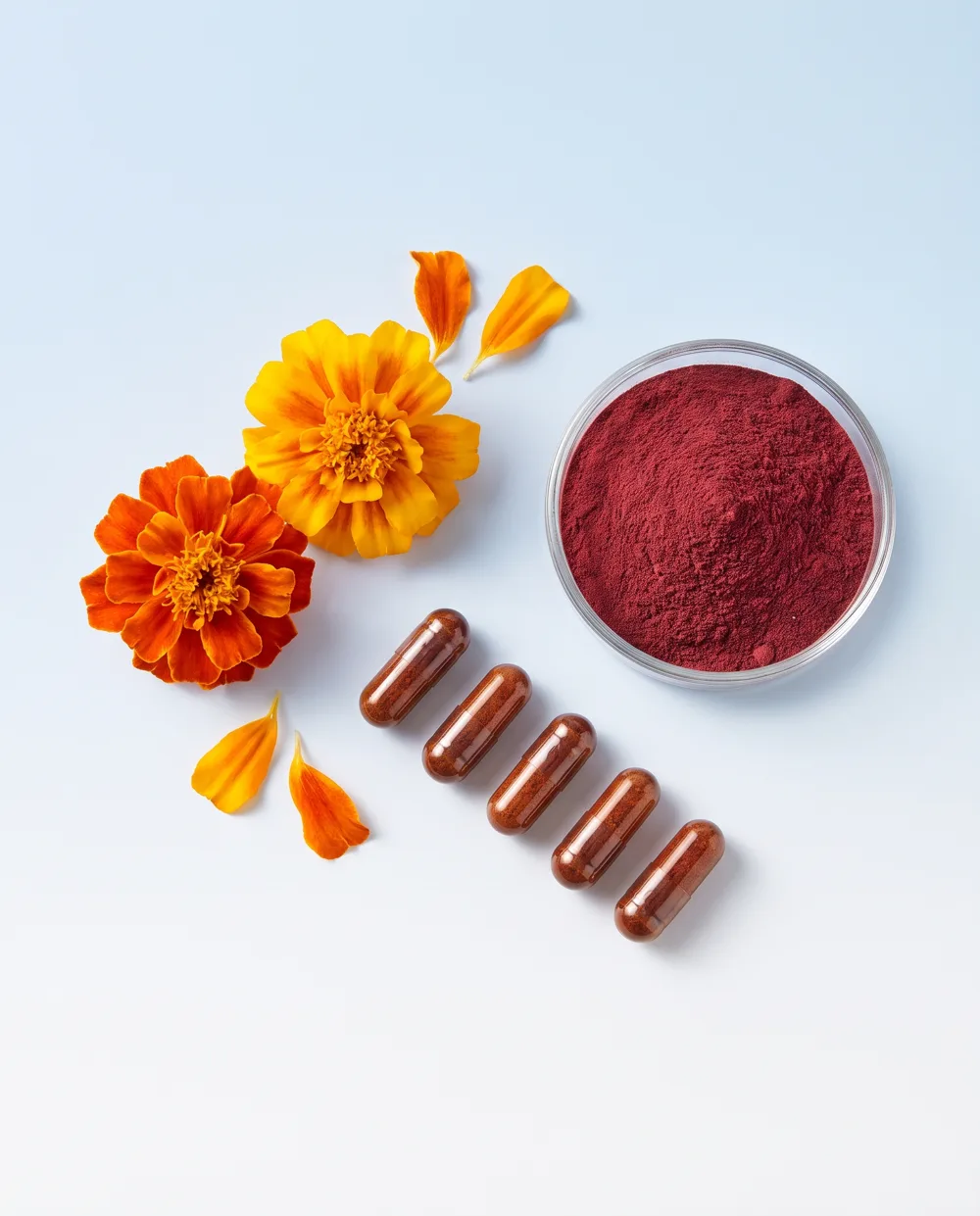
All 3 eye pigmentsyour body can't make on its own.
At the centre of your retina sits the macula – the small spot you use for reading, faces and fine detail. It holds three yellow pigments: lutein, zeaxanthin and meso‑zeaxanthin. Together they work as the eye's natural filter.
Your body doesn't make them on its own. They have to come from food or a supplement, and most people don't get much lutein or zeaxanthin from food.
That is why the changes are so easy to miss. Evenings feel dimmer, headlights glare more, small print takes more effort – and you simply adjust.
Klaris makes the daily amount consistent, so your eyes get all three, every day.
The silent vision epidemic
IN THE NEWS
BRIGHTFOCUS FOUNDATION3 January 2023
Nearly 20 Million American Adults Have Age-Related Macular Degeneration, New Data Shows
MEDICAL NEWS TODAY11 January 2024
Age-related macular degeneration expected to affect 288 million people by 2040
WORLD HEALTH ORGANIZATION10 February 2026
Globally, at least 2.2 billion people have a near or distance vision impairment.
Changes like these usually build slowly, often before anything is noticed. The part you can act on every day is nutrition: the macula depends on 3 pigments your body can't make, so they have to come from food or a supplement. Klaris gives you all 3 in one daily dose.
See what's inside ↑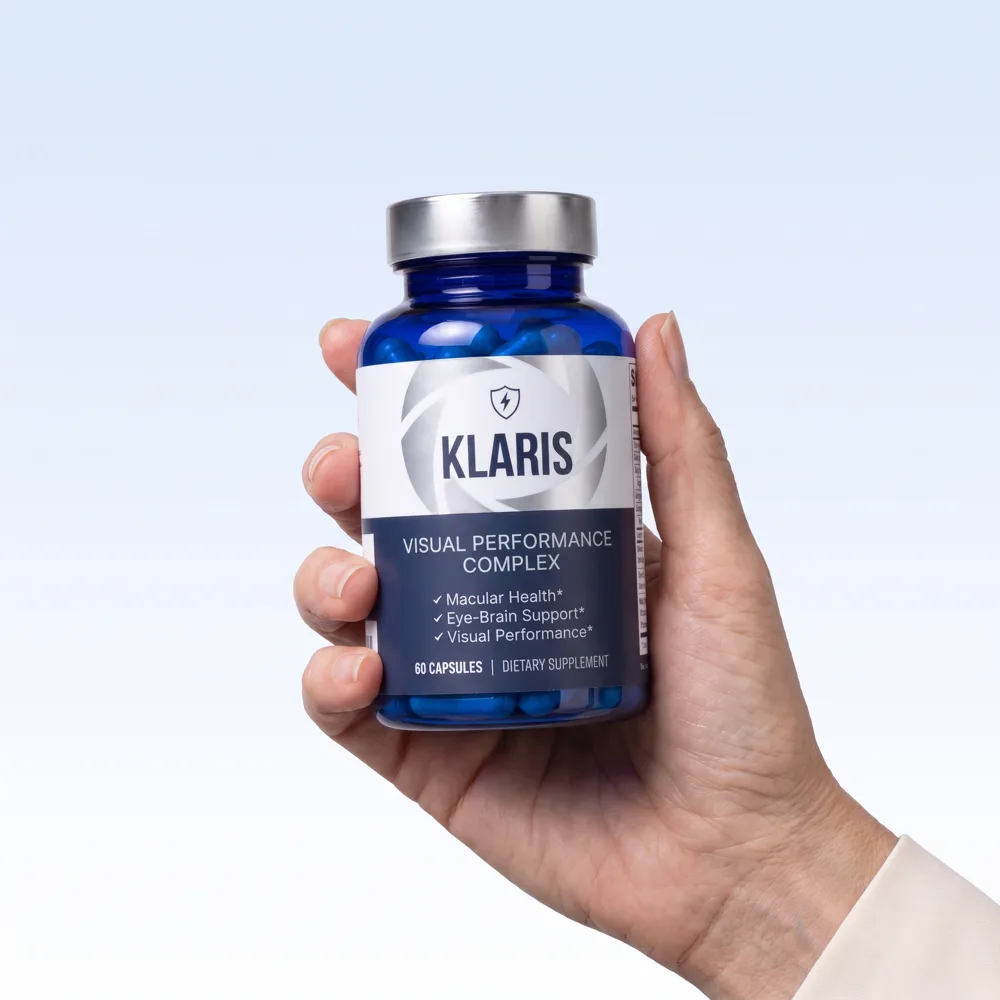
We got tired of eye vitaminsbuilt for 2001.
Most eye supplements on the shelf are still copies of a formula from two decades ago – lutein alone, a heavy dose of zinc, and beta-carotene that current research links to real risks for smokers. The science moved on. The bottles didn't.
Klaris started with one question: if we rebuilt an eye formula from today's research instead of yesterday's habit, what would go in it?
The answer wasn't a single hero ingredient. It was the full macular pigment trio – lutein, zeaxanthin and meso‑zeaxanthin – at the doses studies actually used, paired with the antioxidants that protect that layer and the B-vitamins that carry the signal from eye to brain. No under-fills. No beta-carotene. No synthetic stand-ins.
We built the formula we wanted our own parents to take.
FAQ
Is it safe to take with prescription medications?
Klaris is a dietary supplement, but if you take blood thinners, thyroid medication, or any prescription drug, please review the label with your doctor or pharmacist before starting.
Is it safe for current or former smokers?
Klaris has no beta-carotene - the ingredient smokers are told to avoid. As with any supplement, check with your doctor if you're on medication.
How quickly will I notice a difference?
Levels build gradually. The research on these ingredients runs over months, not days. Everyone's different. Sharper contrast and easier night driving usually settle in over 3 to 6 months as the macular pigment rebuilds.
Can I take it with my multivitamin or other eye supplement?
Klaris already includes the strongest pieces of a standard AREDS2 formula plus the additions the research has moved on to since. Most people switch fully rather than stack two formulas. If you want to keep your current multivitamin, please review both labels with your doctor or pharmacist to avoid doubling up on the same nutrients.
How many capsules per day?
Two capsules a day, with food. A 60-capsule bottle is a 30-day supply.
Is it gentle on the stomach?
Klaris uses zinc citrate, a gentler form than the high-dose zinc oxide found in older formulas. Take both capsules with food to minimize any chance of nausea.
Where is it made and what is the quality standard?
Assembled in the USA, in a GMP-certified facility. Third-party tested.
Will Klaris help if my eyes seem fine now?
Most people don't get much lutein or zeaxanthin from food. Klaris makes the daily amount consistent. Klaris is built to support and maintain that protection over time, not just once problems show up.
How is Klaris different from a regular eye vitamin or multivitamin?
Most eye vitamins follow the older AREDS2 recipe - lutein and zeaxanthin only. Klaris adds the third macular carotenoid (meso-zeaxanthin), astaxanthin, and an active-form B-complex, covering the full macular filter and the eye-to-brain pathway in one daily dose.
Are there any side effects?
Klaris uses clinically studied ingredients and is generally well tolerated. It's beta-carotene-free. As with any supplement, check with your doctor if you take medication or have a medical condition.
Do I need to keep taking it?
Macular pigment is maintained by ongoing intake - like any nutrient, levels drift back down if you stop. Most people take Klaris daily to keep building and holding their reserve, which is why the multi-month plans are the best value.
How do I control my subscription?
Yes - pause, skip or cancel anytime from Control your subscription in the footer, no questions asked. You are also covered by a 30-day money-back guarantee from the date of delivery.
Is there a money-back guarantee?
Yes. Klaris is backed by a 30-day money-back guarantee. Terms apply.
Try it risk freefor 30 days.
*These statements have not been evaluated by the Food and Drug Administration. This product is not intended to diagnose, treat, cure, or prevent any disease.