I'm an Eye Doctor. Here's What No One Tells You About Vision After Cataract Surgery.
This article is produced by Klaris
The surgery goes beautifully. The cloudy lens comes out, a clear one goes in, and for the first time in years my patient sees the world in high definition.
Colors are brighter. The fog is gone. They tell everyone they wish they had done it sooner.
Then, months or sometimes a couple of years later, they are back in my chair, worried.
The clarity has softened. There is a haze creeping back at the edges, glare around headlights at night, a sense that something is slipping.
And almost every one of them asks the same frightened question.
"Is the cataract coming back?"
It is not. A cataract cannot grow back, because the lens it formed in was removed.
But the worry is real, and the vision change is real, and most people were never told what to actually expect after surgery.
So here is the conversation I have with my own post-surgery patients.
1.What cataract surgery actually does
Your eye has a natural lens sitting just behind the colored part. A cataract is that lens going cloudy with age. Surgery removes the clouded lens and replaces it with a clear artificial one called an intraocular lens.
That is the whole job. It fixes the lens. It restores the clarity the cataract took.
What it does not touch is the back of the eye. The retina, and the small central patch of it called the macula, are a completely separate structure.
Surgery does not repair them, refresh them, or protect them. They were aging before your surgery and they keep aging after it, on their own schedule.
This is the single most important thing patients are never told: a successful surgery clears the lens and leaves the retina exactly as it was.
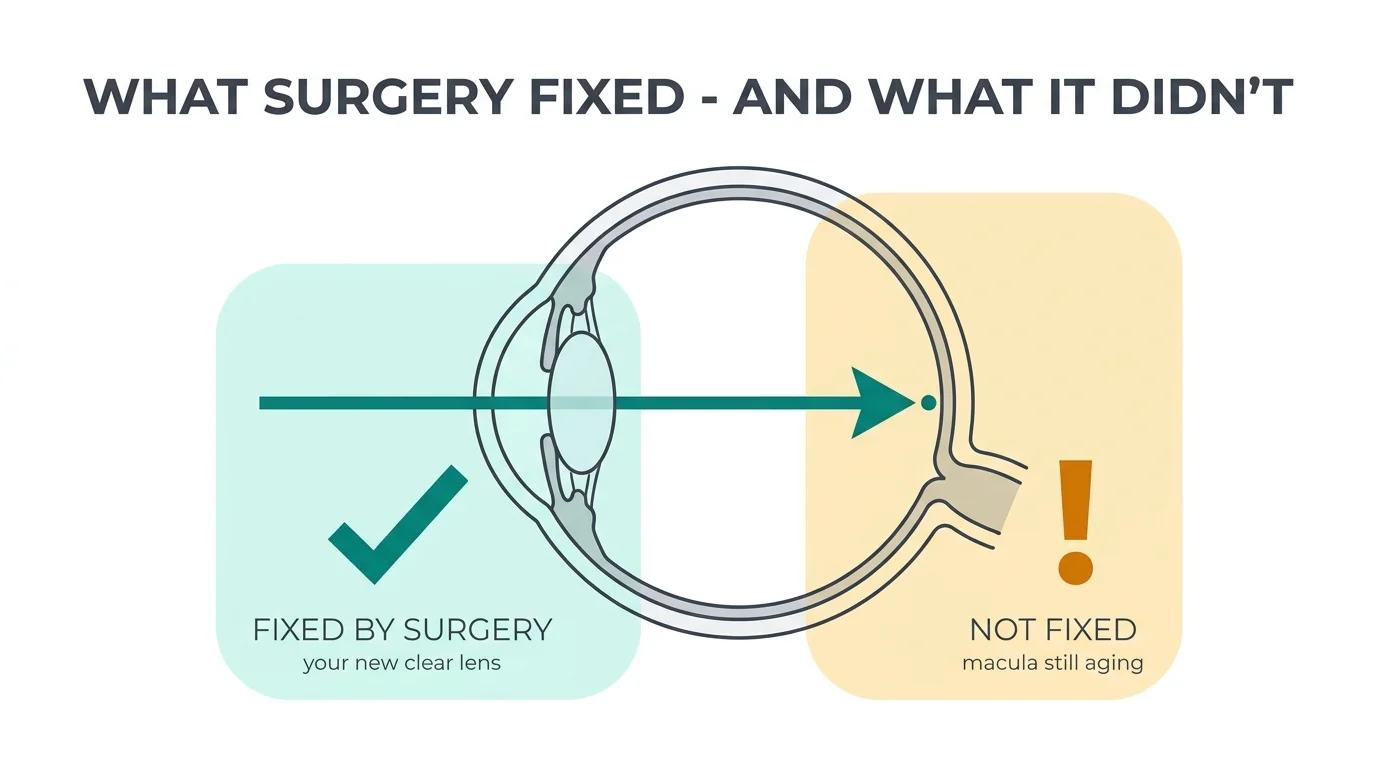
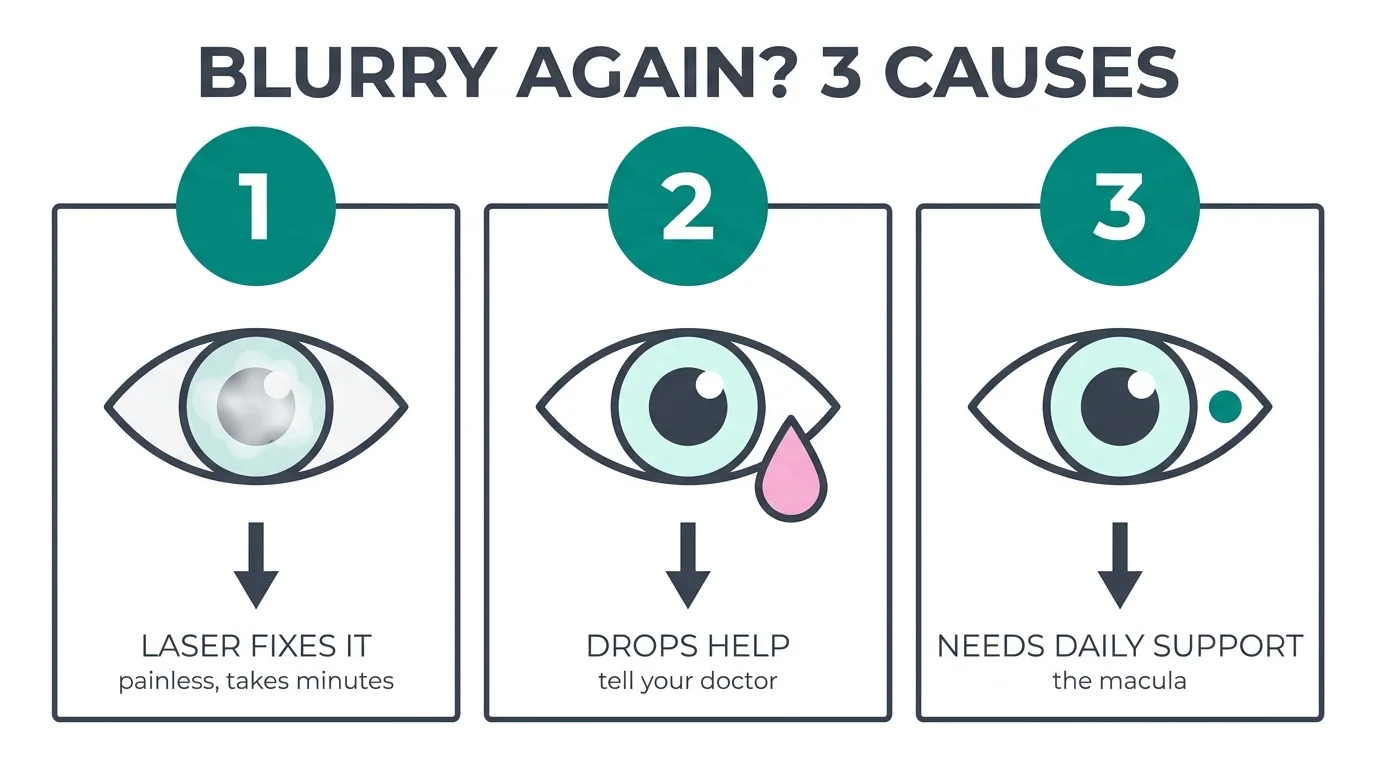
So when vision changes again after surgery, it is almost never the lens. It is one of three other things.
2.Why vision can still slip after a successful surgery
1. The membrane behind the implant clouds over
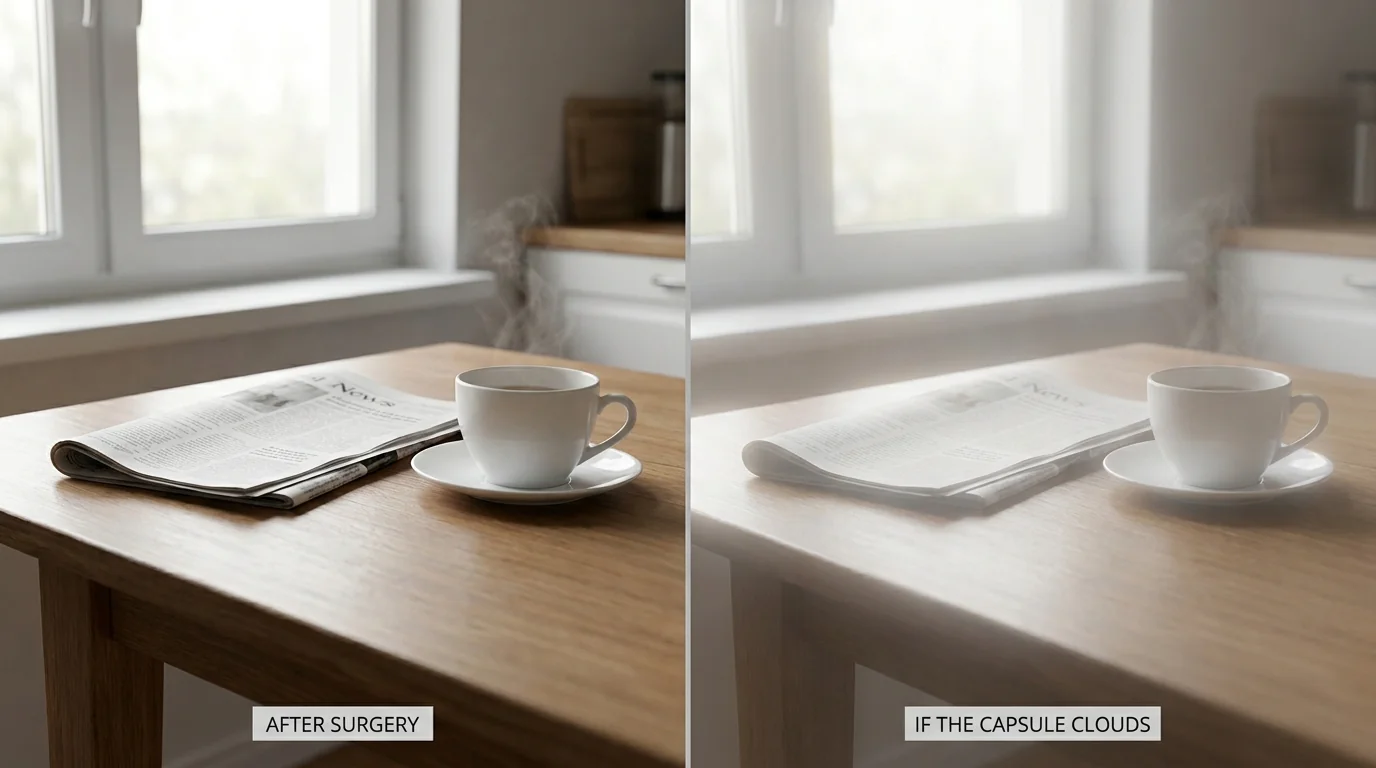
When the surgeon places the new lens, it sits inside a thin, clear membrane called the capsule. In a large share of patients, months or years later, that membrane gradually clouds.
It is called posterior capsule opacification, and it produces exactly the symptoms people panic about: a returning haze, softer vision, glare at night.
People call it a "secondary cataract," but it is not a cataract at all.
And here is the good news. Your eye doctor can usually clear it in a few painless minutes with a laser, in the office, no incision.
If your vision has hazed over again, this is the first thing to rule out, and it is worth booking an exam rather than living with it.
2. Dry eye
Cataract surgery commonly leaves the eye surface drier for a while, and dry eye blurs vision between blinks and makes it slow to settle. It is one of the most common post-surgery complaints, and it is very manageable once your doctor knows about it.
3. The macula, which surgery never addressed
This is the one that surprises people. With the cloudy lens gone, the retina is suddenly under a brighter, sharper, less filtered light than it has had in years.
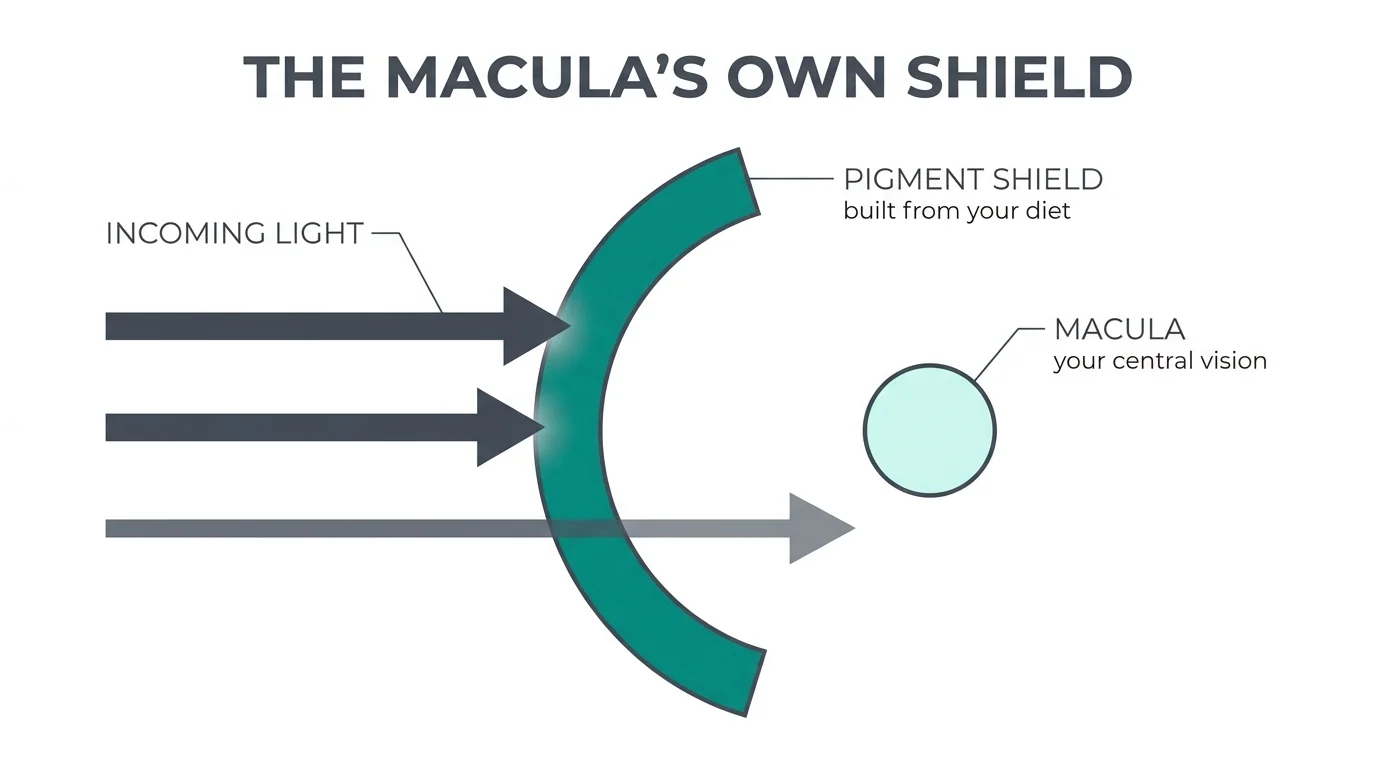
And if the macula's own protective pigment has thinned with age, the things that pigment governs, glare recovery, contrast in dim light, comfort with oncoming headlights, can feel worse, not better, even though the surgery succeeded.
Your old cloudy lens was, in a strange way, acting as a heavy filter. Remove it, and a retina that was already running low on its own protection has less to fall back on.
3.The part surgery can't fix, and what nutrition can and can't do
Let me be precise here, because this is where a lot of misleading marketing lives.
A supplement cannot clear a clouded capsule. It cannot treat dry eye. It cannot undo anything that needs a laser or a doctor.
If your vision has become hazy after surgery, the honest advice is to get examined, not to buy a pill. I want to be very clear about that.
What nutrition can support is the macula, the part surgery never touched.
The macula builds its protective pigment from three plant carotenoids: lutein, zeaxanthin, and meso-zeaxanthin.
Lutein and zeaxanthin must come from food, and meso-zeaxanthin is normally made in the retina itself from lutein.
For some people, around 1 in 5, that conversion does not raise macular pigment, which is why a formula that supplies all three directly matters.
Clinical trials have shown that supplementing all three raises macular pigment density and is associated with better glare recovery and contrast, the exact functions that can feel exposed once the cloudy lens is gone.
Astaxanthin has been studied for its role in easing eye fatigue and strain, and active B-vitamins support the normal function of the small blood vessels that feed the retina and optic nerve.
That is a maintenance and support role for the structure surgery leaves behind. It is not a fix for the surgery, and any product that tells you otherwise is one to walk away from.
"Nobody explained that the surgery only fixed the lens. Once I understood the retina was a separate job, the whole thing finally made sense."
4.Where Klaris fits
For patients who have had their cataract surgery, ruled out a clouded capsule with their doctor, and want to support the part of the eye the surgery did not address, this is the formula I point to.

What is in the Klaris Supplement
- Lutein 10 mg (from marigold)
- Zeaxanthin 2 mg (from marigold)
- Meso-zeaxanthin 10 mg
- Astaxanthin 4 mg (from red algae)
- Vitamin C 250 mg
- Vitamin E 134 mg
- Active Vitamin B6 2 mg
- Methyl folate 400 mcg DFE
- Methylcobalamin (B12) 250 mcg
- Zinc citrate 25 mg
- Copper citrate 2 mg
Eleven ingredients. All three macular carotenoids. No beta-carotene.
Plant-based, produced in an FDA-registered, GMP-certified facility. Two capsules daily with food. Tell your surgeon and eye doctor about it, as you should with anything you take after a procedure.
5.The bottom line
If your vision has changed since your cataract surgery, do not panic and do not assume the surgery failed. The cataract is not back.
Start by booking an exam, because the most common cause is a clouded capsule your doctor can clear in minutes.
Then understand what surgery did and did not do. It gave you a clear lens. It did not give you a new retina.
The macula behind that beautiful new lens is the same one you had before, and it still needs feeding. Surgery handled the part it could reach. The rest is yours to support.

This article is for general educational purposes and is not medical advice. Any change in vision after cataract surgery, including new haze, glare, flashes, floaters, or pain, should be evaluated by your eye care professional promptly. These statements have not been evaluated by the Food and Drug Administration. Klaris is not intended to diagnose, treat, cure, or prevent any disease.
References
- Age-Related Eye Disease Study 2 (AREDS2) Research Group. JAMA. 2013.
- Nolan JM, et al. Macular pigment and visual performance in subjects with age-related macular degeneration. Curr Eye Res. 2016.
- Hammond BR, et al. The effects of macular pigment on visual performance. Vision Res. 2014.
About the author
Neuro-ophthalmology, 20+ years in clinical practice
Dr. Markovic reviews every Klaris article for medical accuracy. Her clinical focus is age-related vision change, macular pigment and the nutrition behind both. Read Dr. Markovic’s full profile.