Why Your Eyes Feel Heavy After a Screen Day, and the Salmon-Pink Antioxidant That Helps
This article is produced by Klaris
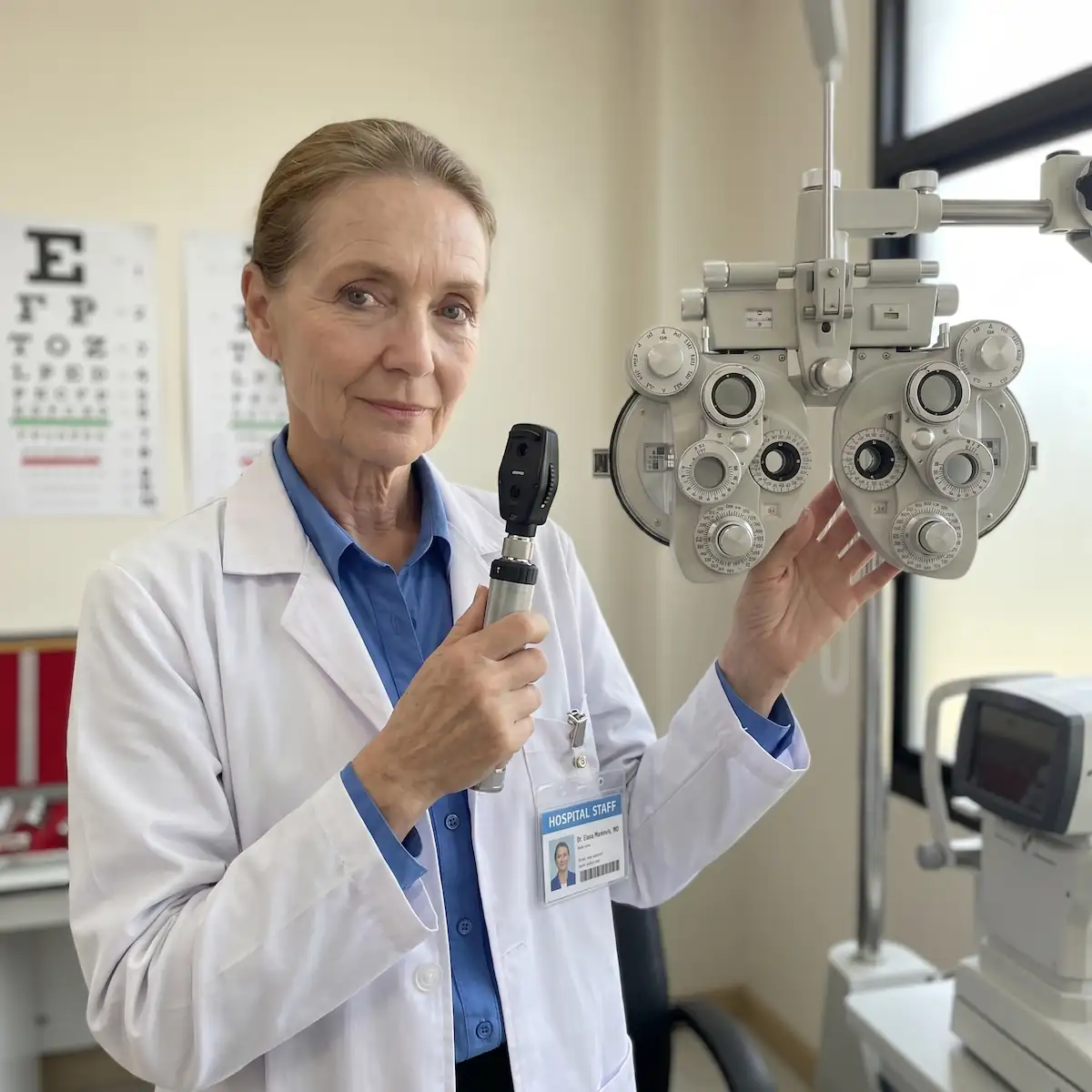
You have been on a screen since morning. The work is fine, but your eyes are not. They feel heavy.

A look at the late-day eye fatigue most supplements ignore, and the one nutrient studied for it.
1.It starts around 3 in the afternoon
When you glance up from the laptop to someone across the room, it takes a beat for the world to sharpen. Reading gets slower. By the end of the day, there is a dull pressure behind your eyes that no amount of coffee touches.
Most people file this under getting older, or just being tired. It is neither, exactly.
It has a name: accommodative fatigue. And the reason your eye vitamin is not helping is that most of them were never built for it.
2.Your focusing system has been working overtime
Every time you look at something close, your eyes do active work to hold it in focus. Spend eight or ten hours a day on near work, screens, documents, phone, and that focusing system fatigues, the same way any muscle does after a long shift.
The result is the late-day heaviness, the slow refocus, the burn.
This is not about aging eyes, and it is not about blue light frying your retina, a claim that human research has not actually established.
It is a workload problem. Your visual system is doing more close focusing than any generation before it, and it is asking for support.
3.Why your lutein eye vitamin leaves a gap
If you have bought an eye supplement, it was almost certainly built around lutein and zeaxanthin.
Those are real and they matter: they build the macular pigment that protects the center of your vision and supports contrast and glare recovery.
But they were studied for long-term macular health, not for the daily focus-fade after a screen day. They do one job well, and it is not this one.
There is a second gap. For roughly 1 in 5 people, standard lutein supplements do not raise macular pigment at all.
They are retinal non-responders: their eyes do not take up or convert enough lutein, so the protective pigment never builds, no matter how much they take.
That is why getting meso-zeaxanthin directly, rather than relying on your eyes to make it, matters.
4.The salmon-pink antioxidant most formulas skip
The nutrient with the most direct evidence for screen fatigue is one most eye vitamins leave out: astaxanthin.
It is the deep salmon-pink pigment that gives salmon and shrimp their color, made by a microscopic red algae called Haematococcus pluvialis.
It is a remarkably strong antioxidant, by one common laboratory measure roughly 6,000 times more effective at quenching singlet oxygen than vitamin C.
More to the point: across a series of randomized trials, astaxanthin has been studied specifically in screen and computer users for easing eye strain and accommodative fatigue.
It is studied for the exact problem this article opened with, not borrowed from a different one.
To be clear about what that means: astaxanthin is studied to support the eyes' ability to keep focusing comfortably and to help with the fatigue that builds up after hours on screens. It is a support nutrient, not a treatment.

5.The dose is the part that gets skipped
A nutrient only does what its dose allows.
The screen-fatigue trials that show a benefit have used astaxanthin in the low single-digit milligram range, and trials at 4 mg a day have reported improvements in focusing comfort and screen-related eye fatigue in both adults and screen-heavy children.
Klaris is built with 4 mg of astaxanthin per daily serving, the amount used in those screen-strain trials, alongside the full macular carotenoid set.
That is the difference between an ingredient on a label and an ingredient at a dose that was actually studied.
6.What is actually in it
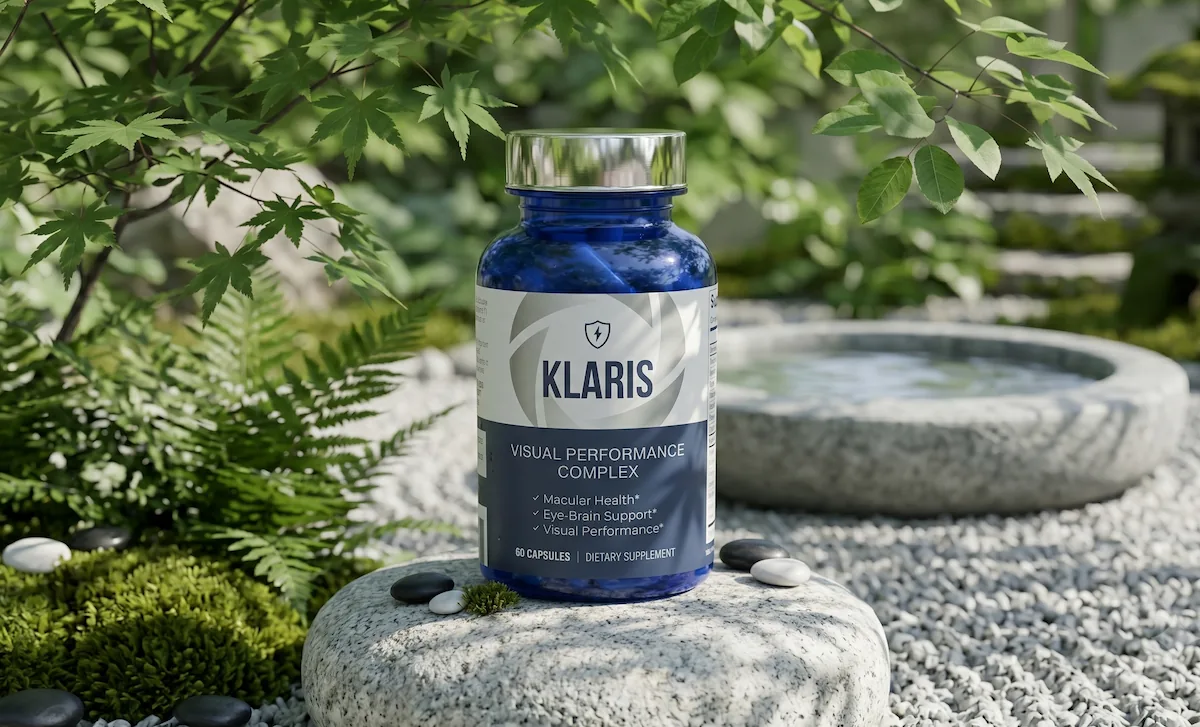
Klaris delivers 26 mg of total carotenoids per daily serving:
- lutein 10 mg,
- zeaxanthin 2 mg,
- meso-zeaxanthin 10 mg,
- and astaxanthin 4 mg, plus active-form B vitamins that support the optic nerve.
The carotenoids are sourced from marigold extract; the astaxanthin from red algae. Two capsules a day.
Putting all three macular carotenoids together raises macular pigment more than lutein and zeaxanthin alone.
Adding astaxanthin is what extends the formula from long-term protection into daily screen support.
How Klaris compares
| Older AREDS2-style formulas | Klaris | |
|---|---|---|
| Macular carotenoids | Usually lutein + zeaxanthin only | Full triad incl. meso-zeaxanthin |
| Central coverage | Less central coverage | Foveal-center carotenoid included |
| Screen-fatigue support | None | Astaxanthin 4 mg, studied dose |
| Beta-carotene | May contain it (a concern for smokers) | None |
| Carotenoid source | Often synthetic | Marigold + red algae |
7.Before you buy
A few honest notes.
- Astaxanthin is studied for support, not as a cure for anything, and results in trials build over weeks, not on day one.
- If you are pregnant or breastfeeding, or on medication, check with your clinician first.
- And if you wear blue-light glasses already, this is not a competitor to them; it works from the inside on a different part of the problem.

This is sponsored content from Klaris and reflects the brand's own position. Always consult your eye care professional. These statements have not been evaluated by the FDA. This product is not intended to diagnose, treat, cure, or prevent any disease.
References
- Accommodative fatigue and near-work eye strain in screen users (computer vision syndrome / asthenopia literature).
- Ophthalmol Ther 2023 review (PMC9938358): human evidence for blue-light retinal damage is inconclusive; normal screen use is not shown to harm the human retina.
- Stringham & Hammond 2008; Loughman 2012: macular pigment density linked to contrast and glare recovery.
- PMC3635211 (~17.4% retinal non-responders); PMC4599964 (serum lutein vs macular pigment); PNAS 2017 (meso-zeaxanthin made in the retina by RPE65).
- Nishida et al. 2007, Carotenoid Science 11:16-20: singlet-oxygen quenching ~6,000x vitamin C (in-vitro antioxidant assay).
- Astaxanthin screen/VDT eye-strain RCTs: Sasaki 2006; JCBN 2023 VDT trial; 4 mg adult eye-strain trial (ages 45-64); AstaReal 2025 pediatric digital-eye-strain RCT (4 mg/day).
- Nolan et al., IOVS: all three carotenoids raise macular pigment more than lutein + zeaxanthin alone.
About the author
Neuro-ophthalmology, 20+ years in clinical practice
Dr. Markovic reviews every Klaris article for medical accuracy. Her clinical focus is age-related vision change, macular pigment and the nutrition behind both. Read Dr. Markovic’s full profile.